
Pakistani Achar: The Taste of Home
If you walk into any Pakistani kitchen you will see a jar of achar resting somewhere on the counter. It does not matter whether the meal is daal chawal, paratha or plain rice on the plate.A spoon of achar next to it, and the whole meal changes. It’s not really a “side dish” in our house. It’s just part of eating.
We make ours at SM Desi Products the way it’s always been done at home. Mustard oil, real spices, and time. That last part is the one most people skip.
So here’s the full picture on Pakistani achar. What achar really is why achar tastes the way it does the types of achar you might find and a few points that are worth knowing before you buy a jar of achar.
What Achar Actually Is
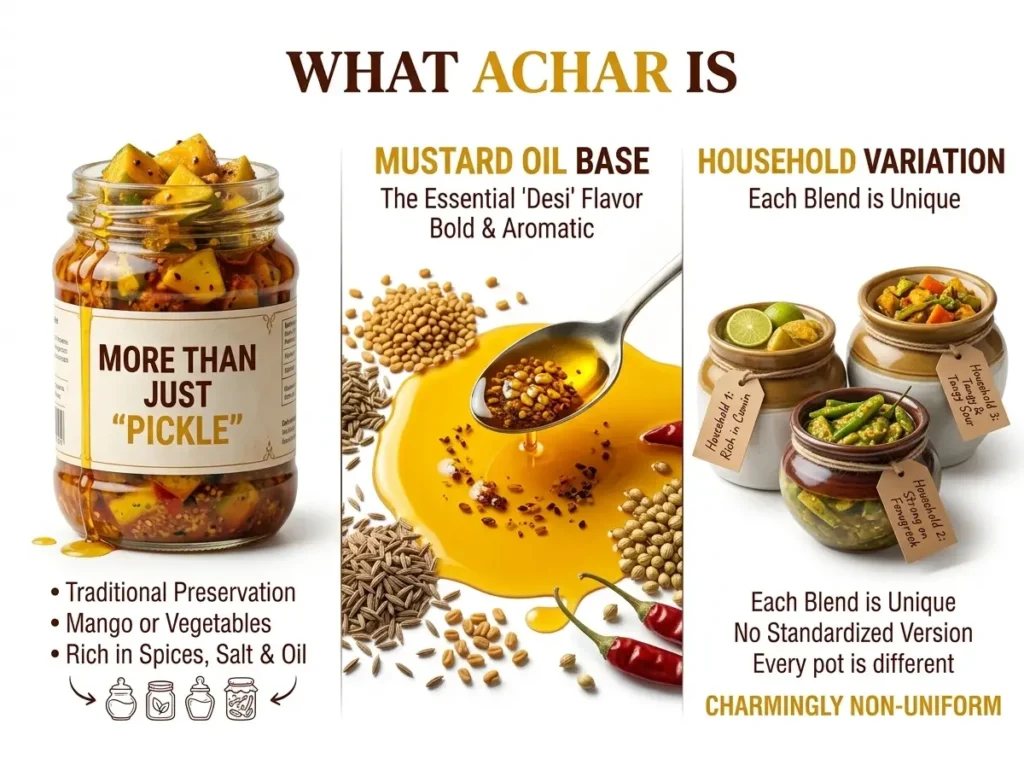
Achar is pickle, but calling it that undersells it a bit. It’s not the mild vinegar stuff you see abroad. It’s mango or vegetables preserved in oil, salt, and a heavy hand of spices. Mustard oil usually carries the base flavor, and honestly that’s most of what makes it taste “desi.”
Every household has its own version too. Ask five families and you’ll get five different opinions on how much fenugreek is “too much.” That’s kind of the charm of it. Achar was never meant to be standardized.
Why It’s Not Like Other Pickles
A few things separate it from the rest.
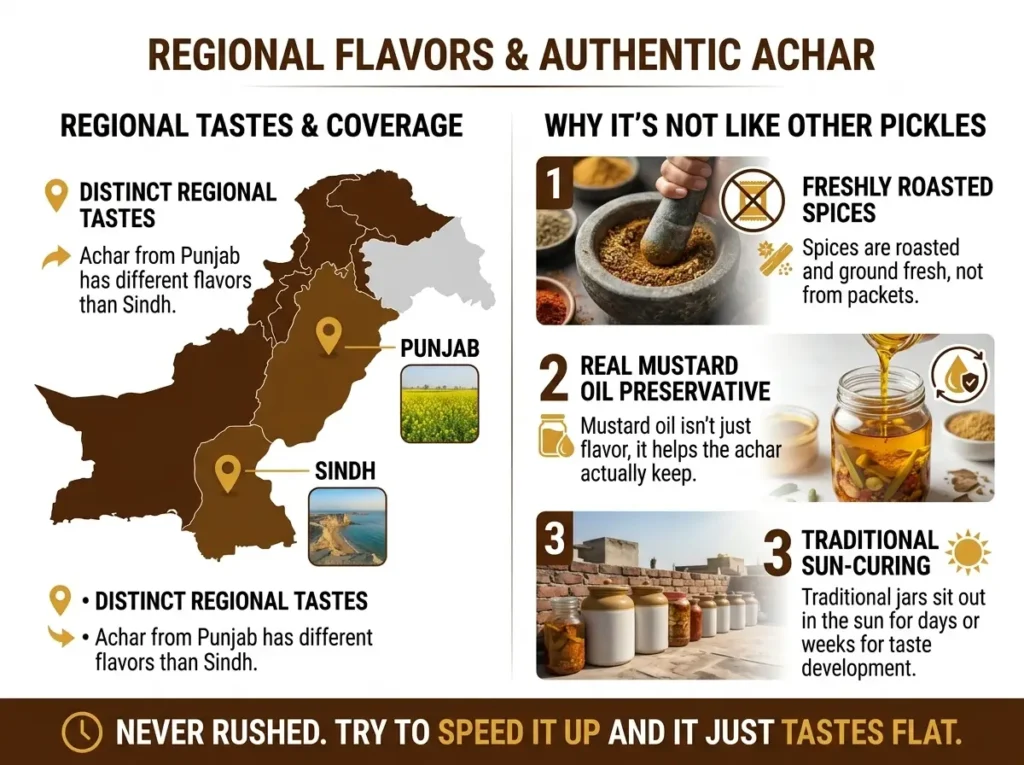
The spices get roasted and ground fresh instead of coming out of a packet. Mustard oil isn’t just flavor either, it helps the achar actually keep. Traditional jars sit out in the sun for days, sometimes weeks, and that’s really where the taste comes from. And it changes by region too – achar from Punjab won’t taste the same as something made in Sindh.
You can’t really rush any of this. Try to speed it up and it just tastes flat.
The Types People Actually Buy
How It Gets Made
Mustard oil gets heated, then cooled down before it goes in. Skip the cooling step and add it too hot, and the whole jar can turn out wrong.
Mango, vegetables, or lemon get picked before they’re fully ripe. Washed, cut, dried off well – any water left behind is basically an invitation for the batch to spoil early.
Salt goes in first to pull moisture out. Then the spice mix, dry roasted and ground, and this is honestly where the whole flavor starts taking shape.
Then it sits in the sun. Days, sometimes weeks. The step that is often skipped when people try to sell achar and quickly is the curing process and that is exactly why cheap achar has almost no flavor.
There’s no fast way to do this properly.
Things That Give Away a Bad Jar
Market shelves have plenty of achar that isn’t made properly, and there are usually signs.
Vague ingredient lists, that’s one red flag right away. Barely any oil in the jar – that’s often where someone cut costs, since oil does more than add taste, it helps preserve the whole thing. A color that’s too bright or too even can mean dye instead of actual spices. And if the taste is flat, one-note, missing that layered thing achar is supposed to have, the spice blend probably got cut back somewhere.
Worth a second look before buying, basically.
About the Health Side
Achar sits in oil and salt, so it’s not something to eat by the spoonful at every meal. It’s naturally salty, and mustard oil itself is a fairly strong ingredient on its own.
If you’re watching your blood pressure or your salt intake generally, it’s worth asking a doctor how much achar actually fits into that. For most people though, a small bit with a meal is exactly how it’s supposed to be eaten. Flavor, not the main course.
Keeping a Jar Fresh
Dry spoon, every single time – water is what starts spoilage. Lid closed tight after you use it. Once it’s cured, keep it somewhere cool and out of direct sun. Oil should stay covering the top of the achar, not sitting off to the side. And don’t mix different types in one jar, keep them separate.
Do that much and a jar can last for months without any trouble.
Why People Go With SM Desi Products
We’re not out here trying to reinvent achar or put some new spin on it. We just didn’t want the actual taste to disappear from what’s available on shelves.
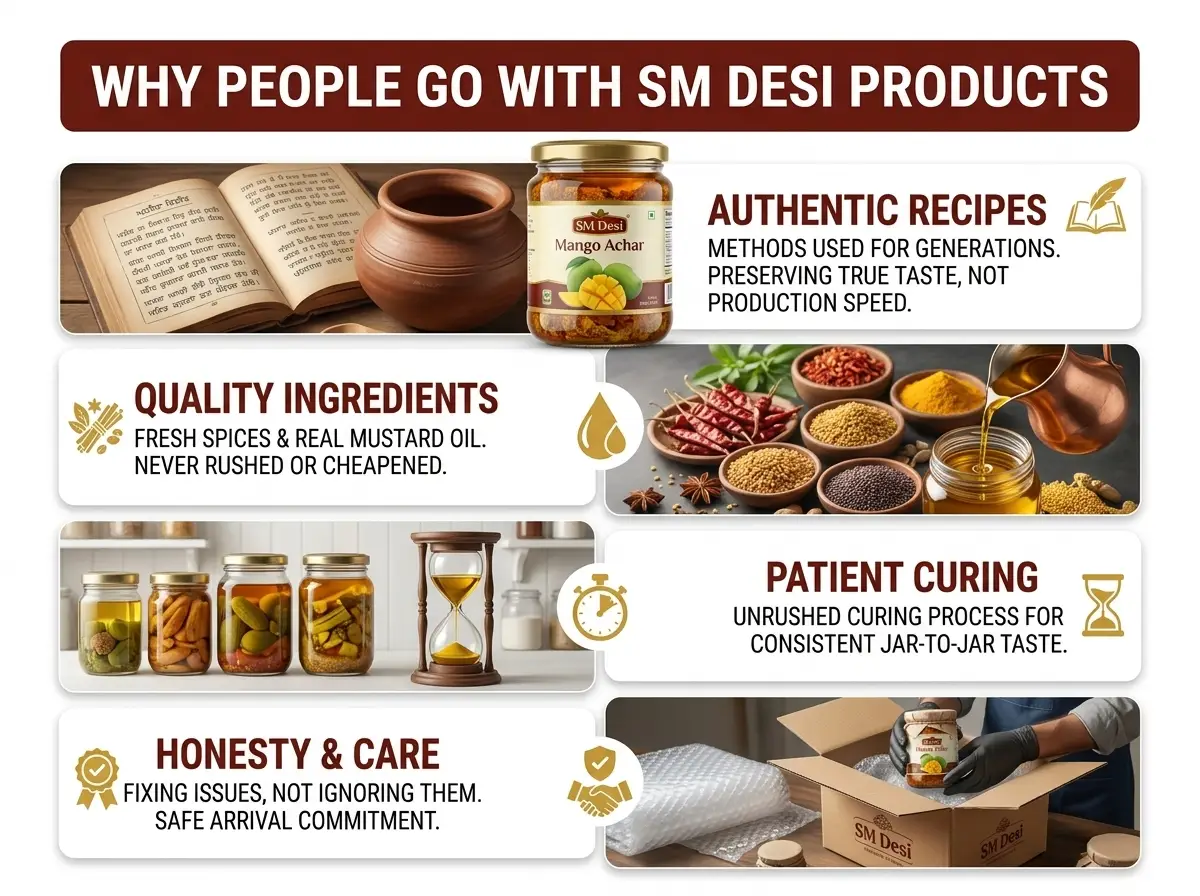
Our recipes are the same methods used for generations, not something built to run faster on a production line. Proper mustard oil, fresh spices, and we don’t rush the curing just to move stock quicker. Every batch goes through the same process, so what you get stays consistent jar to jar. And it’s packed so it actually shows up the way it should.
If something’s off with a batch, we’d rather know about it and fix it than pretend it didn’t happen.
One Last Thing
Achar isn’t a complicated idea to explain. Making it right, though, takes time that a lot of mass-produced jars just skip past. From the oil to how the spices get roasted, every step changes how the final jar turns out.
At SM Desi Products, we’ve stuck to doing it the way it’s always been done. No shortcuts, nothing artificial, just achar that tastes like it’s supposed to.
Order a jar and judge for yourself.