Pure Honey Pakistan: Buy 100% Natural Shehad Online
Here’s an uncomfortable fact: if you bought honey from a regular shop in Pakistan in the last year, chances are it wasn’t really honey. It was sugar syrup, colored and thickened to pass as the real thing. Never crystallized, tasted a bit too sweet, barely had a smell sound familiar? That’s usually the giveaway.
We’re not writing this to scare you, just to save you from wasting money on something that isn’t what it claims to be. Below is everything worth knowing about pure honey — how to spot the fake stuff, where good honey in Pakistan actually comes from, and why we at SM Desi Products won’t sell anything we haven’t checked ourselves.
What actually counts as “pure” honey
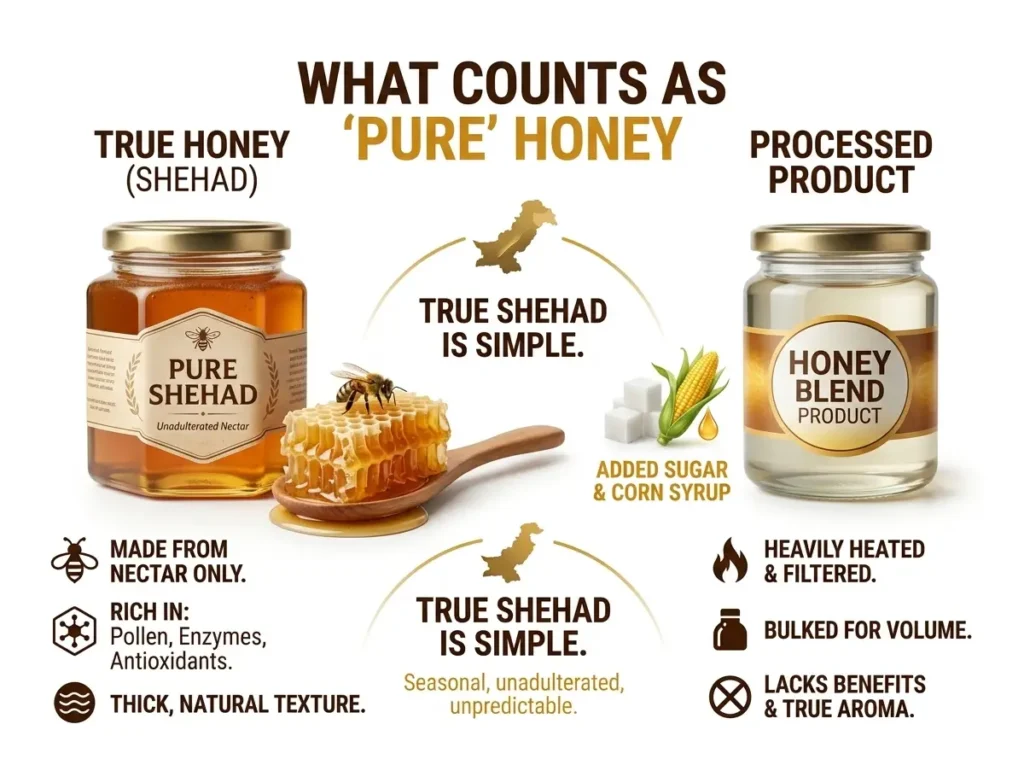
Bees make honey from nectar. That is it. That is the process, at least the version that deserves to be called honey. Honey carries whatever enzymes, pollen and antioxidants the bees put into honey. Nobody has touched honey since. When someone heats honey, heavily filters it, or bulks it up with sugar or corn syrup, it is no longer pure honey.
In Pakistan we just say shehad, but the rule doesn’t change. It should still taste like it came off the comb thick, a bit unpredictable depending on the season, and with a smell that actually means something.
Why this is such a big deal here
A Traditional Part of Pakistani Homes
1. Honey has been part of Pakistani homes for generations.
2. It is traditionally enjoyed with warm water, paratha, and homemade remedies.
3. For many families, honey is a traditional food rather than a modern wellness trend.
The Problem With Adulterated Honey
1. Growing demand for honey has led some sellers to use shortcuts.
2. Sugar syrup and other substances may be mixed with honey.
3. Adulteration can make it difficult for customers to know what they are actually buying.
Why Choosing Pure Honey Matters
1. Buying pure honey helps you get what you are paying for.
2. Proper testing and quality checks can help ensure the honey meets quality standards.
3. Choosing carefully is a smart way to protect your money and make better food choices.
Testing honey yourself, at home
You don’t need a lab. A few things at home will tell you most of what you need to know.
And just use your nose and your fingers a bit. Pure honey has some weight to it, a bit of stickiness, and a smell tied to whatever flowers it came from. The fake stuff tends to smell like nothing much flat, kind of like sugar water with food coloring.
Give it time. Real honey crystallizes as the weather cools down people throw away perfectly good honey thinking it’s gone bad, when crystallization is actually a good sign. If your honey stays smooth and liquid no matter the season, that’s the one to be suspicious of.
There’s also the matchstick trick dip one in honey, try to light it. Real honey usually catches because it doesn’t have much water in it. Diluted honey often won’t light at all.
Put a spoonful in a glass of water. Real honey sinks and stays together for a while before it dissolves. Fake honey just disappears into the water almost instantly makes sense, since it’s mostly sugar water to begin with.
The honey types you’ll come across
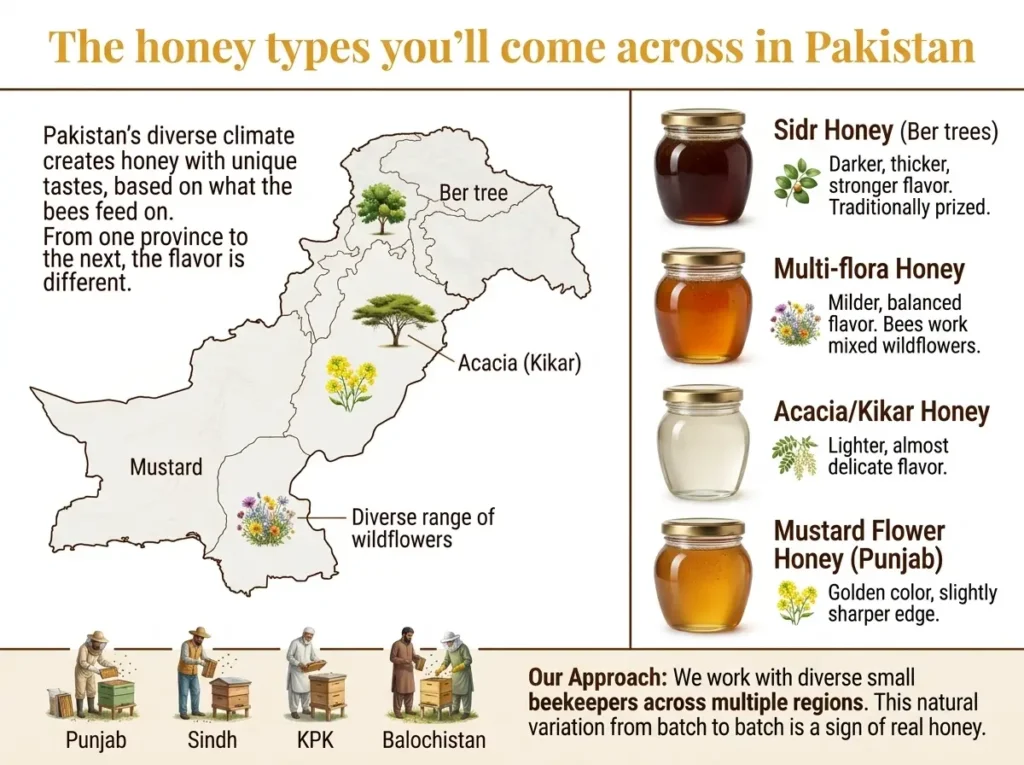
1. Pakistan’s got enough variety in climate that honey from one province can taste completely different from honey two provinces over. It all depends on what the bees were feeding on.
2. Sidr honey, from areas with Ber trees, is the one you’ll hear about most in traditional use darker, thicker, stronger flavor.
3. Multi-flora honey is what you’ll find most often on shelves, collected from bees working a mix of wildflowers, milder and more balanced.
4. Acacia or Kikar honey is lighter, almost delicate.
And if you’re around Punjab during mustard season, you’ll come across mustard flower honey golden, with a slightly sharper edge to it.
We work with beekeepers across a few of these regions rather than sticking to one big source, so honestly, our honey can taste a little different batch to batch. That’s not a flaw. That’s just what real honey does.
What happens between the hive and the jar
What honey is actually good for
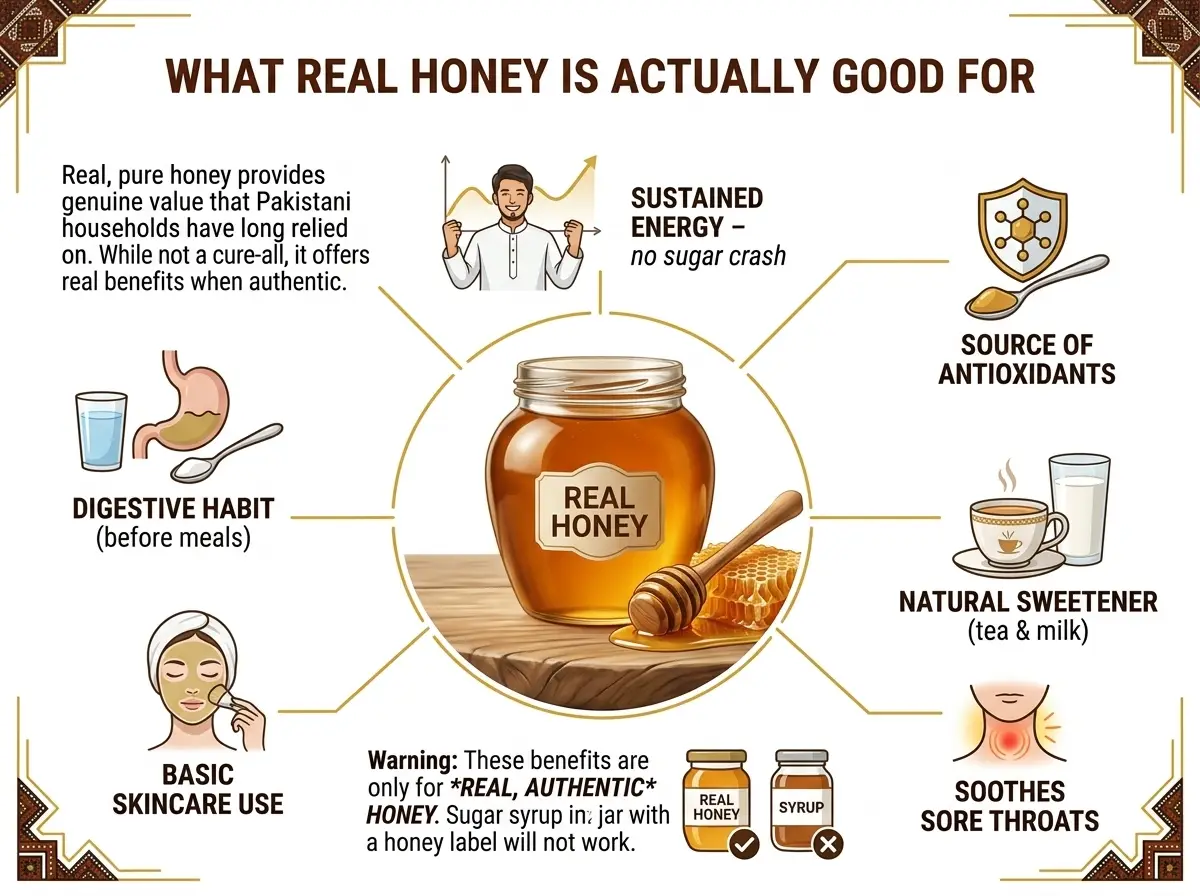
We’ll be straightforward here. Honey isn’t medicine, and we’re not going to pretend it cures anything. But used regularly, real honey does offer some genuine value that Pakistani households have relied on for a long time.
It gives you energy without the crash you get from refined sugar. It’s got antioxidants worth having in your diet. A lot of people still reach for it the moment a sore throat starts. It works fine as a natural sweetener instead of sugar in tea or milk. Some people use it in basic skincare at home. And a spoon in warm water before eating is a pretty common digestive habit in a lot of households.
All of this depends on the honey actually being honey, though. Sugar syrup in a jar with a honey label isn’t going to do any of it.
Storing it right
Keep it somewhere cool and dry, away from direct sun, and put the lid back on properly once you’re done. Try not to dip a wet spoon in moisture does more damage to honey over time than heat does.
Skip the fridge. It just speeds up crystallization and makes the honey harder to scoop out — not harmful, just annoying. If it does crystallize, sit the jar in warm water for a bit and it loosens right back up.
Take care of it like this and honey barely goes bad. Some jars stay good for years.
Mistakes people keep making
The cheapest jar on the shelf usually isn’t a deal it’s a warning sign. Real honey takes time and effort to produce properly, so a price that seems too good is almost always hiding dilution somewhere.
People also judge honey by the jar it comes in, which doesn’t really tell you anything. A nice label says nothing about what’s inside the source matters, not the packaging.
Then there’s the crystallization confusion again — people return perfectly good honey thinking it’s spoiled. And a lot of buyers simply never ask where their honey came from, even though that one detail tells you more than anything printed on the bottle.
Why SM Desi Products
We started this with one idea sell Desi food the way it’s actually supposed to be, without cutting corners just to make it cheaper or last longer on a shelf.
Our honey comes straight from beekeepers we deal with directly. No random middlemen, no bulk imports from people we’ve never met. Nothing gets added to stretch a batch further. What comes out of the hive is what ends up in your jar.
Since we focus specifically on traditional Pakistani food, we get what honey actually means in a Desi household it’s not just a sweetener, it’s tied to how people cook, how they take care of each other, habits that get passed down without ever being written anywhere. Every batch gets a basic check for texture and consistency before we sell it, and if you’ve got questions about where something came from or your order, someone actually answers.
Our process, briefly
We connect with beekeepers who still harvest the traditional way instead of rushing things. Every batch gets checked for texture and smell before we approve it. It’s filtered just enough to clear out the wax, then bottled and sealed to keep it fresh. Once you order, it’s packed carefully and sent out to wherever you are in Pakistan.
There’s nothing complicated about any of this on purpose. The less we interfere, the closer the honey stays to what it was in the hive.
FAQs
Last word
Honey means more here than people often stop to think about — it’s tied to family remedies, morning routines, recipes nobody ever bothered writing down. With so much fake honey around, knowing where your jar actually came from isn’t a minor detail anymore. It’s kind of the whole point.
That’s really all SM Desi Products is trying to do keep honey honest, from the hive all the way to your kitchen shelf.